| MONDAY, APRIL 13, 2026 | The Commerce Department is pushing for government-endorsed, full-stack AI export bundles. States are moving on privacy laws, albeit slowly. And a brand new Safe Mode to listen to. This is CyberScoop for Monday, April 13. |
|
|
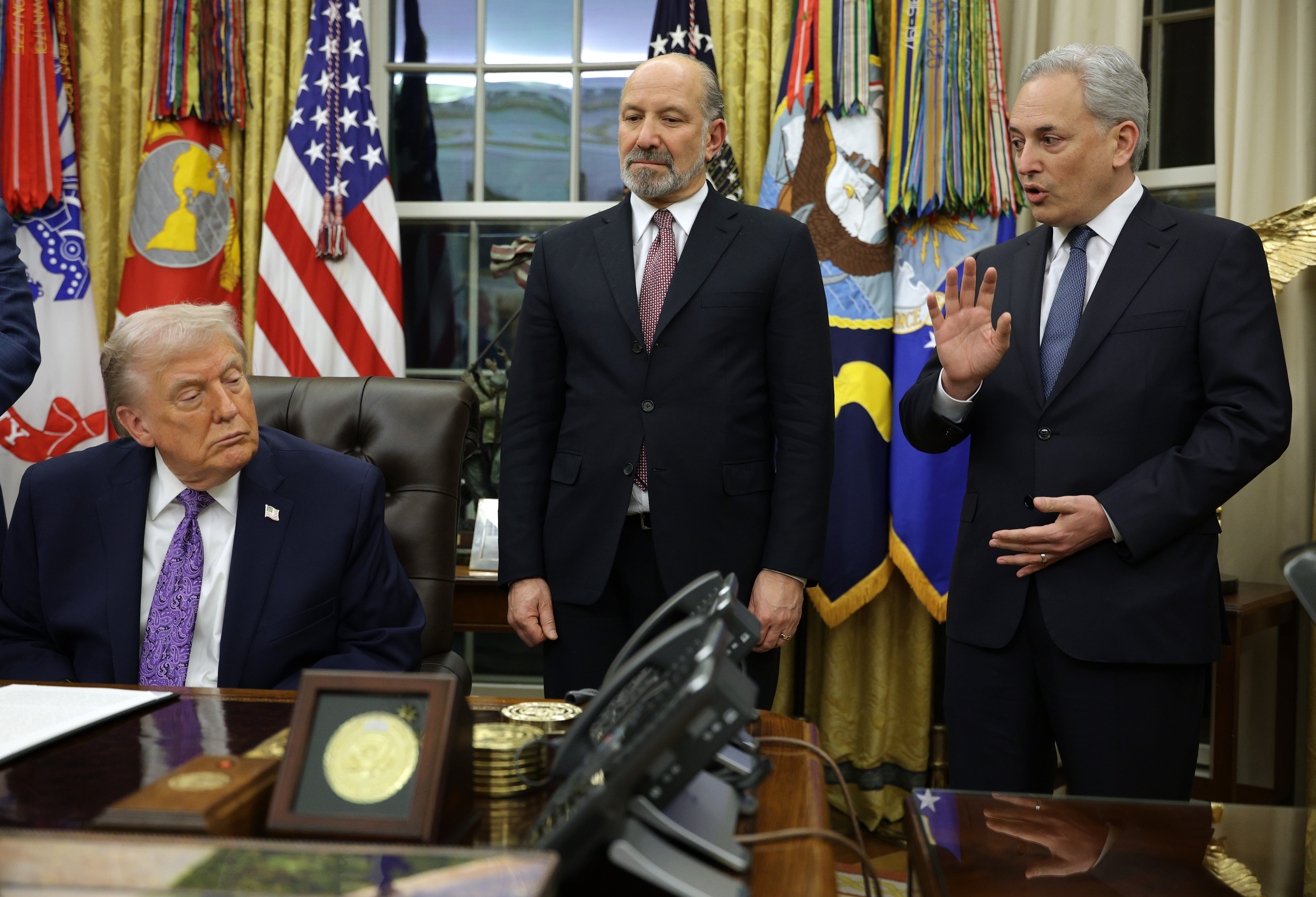
(L-R) U.S. President Donald Trump and Commerce Secretary Howard Lutnick look on as White House artificial intelligence (AI) and crypto czar David Sacks speaks in the Oval Office of the White House on December 11, 2025 in Washington, DC. Trump signed an executive order that curbs states' ability to regulate AI. (Photo by Alex Wong/Getty Images) |
|
|
Trump AI executive order in actionThe Commerce Department is soliciting proposals to assemble government-backed “priority” AI export packages—full-stack bundles spanning models/systems, chips, data center and cloud infrastructure, networking, and security—that U.S. officials will promote to allies and partners and may fast-track for advocacy, licensing review, and financing support. The program, required by a Trump AI executive order, aims to push adoption of U.S.-aligned AI technologies, standards, and governance globally while framing it as an economic and national security strategy. Participation can come from consortia of many companies (including some foreign firms), but with guardrails such as a 51%+ U.S.-content expectation for hardware and restrictions on certain service providers tied to high-risk countries, with final selections made by senior officials based on “national interest” rather than a fixed scoring rubric. Derek B. Johnson has more. |
|
|
Tomorrow - AITalks | April 14, 2026
Register Now! As agentic AI moves from experiment to operational scale, AITalks offers a strategic vantage point into how agencies are moving beyond the hype to reshape cyber defense and citizen engagement. Instead of just reacting to disruption, understand the blueprints for an AI-ready culture and leadership in this new era.
|
|
|
State-level privacy efforts moving, albeit slowlyA NASCIO survey finds states are taking privacy more seriously, with chief privacy officers now in 31 states (up from 17 in 2020), but most privacy programs remain under-resourced and unevenly implemented even as frameworks and training expand. The report says CPO responsibilities are broadening beyond legal compliance into enterprise governance, risk oversight, vendor reviews, and AI governance—while AI simultaneously heightens privacy stakes and risks crowding privacy out. NASCIO recommends stronger executive support, clearer authority, and sustained funding/staffing so states can move from partial efforts to consistent, enterprise-wide privacy execution. StateScoop's Keely Quinlan has more. |
|
|
|
Case in pointOklahoma passed a new consumer privacy law taking effect Jan. 1 that lets residents access, correct, delete, and obtain copies of their personal data, and opt out of certain targeted advertising and the sale of their data. The measure is modeled on Virginia’s approach and is relatively business-friendly, with narrower definitions (including a limited view of what counts as a “sale”), no private right to sue, and a 30-day window for companies to fix violations before penalties. A privacy attorney predicts most people won’t notice much change unless they actively read privacy policies and submit requests, especially since some companies already offer similar rights nationwide to simplify compliance. Keely has more here, too. |
|
|
Workday Federal Forum | Apr 28, 2026
This forum explores how transforming while modernizing can empower agencies to restore strategic capabilities to HR. Learn how to build an adaptable, resilient, and mission-ready workforce. Discover AI's role in accelerating skills-based hiring, streamlining decision-making, and enabling HR teams to prioritize strategic, human-centered work. Register today!
|
|
|
New Safe ModeBob Ackerman (founder of Allegiance Cyber and a partner at DataTribe) joins Safe Mode to talk about where the new national cybersecurity strategy is trying to push the industry—especially around more open, coordinated “active disruption” with government support (and what that does not mean, like hack-back). He shares what he’s hearing from leaders who want clearer “rules of the road,” and why it’s tough to move from reactive collaboration to getting ahead of threats. The conversation then turns to AI and why the next couple of years could get “a little spicy,” with offensive tooling accelerating fast and defenders struggling with visibility, noise, and prioritization. Ackerman’s bottom line: don’t get distracted by shiny objects—double down on fundamentals and hygiene, because you can’t defend what you can’t see. Listen here. |
|
|
|




Comments
Post a Comment
Please leave a comment about our recent post.